
 By
By 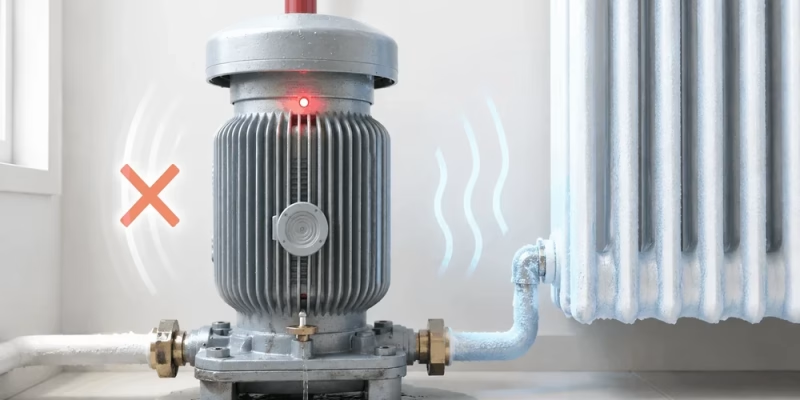
A boiler that fires up but leaves radiators cold is one of the most common complaints heating engineers hear, and it rarely means the whole system needs replacing. Most cases of heating not working trace back to a handful of causes: low pressure, trapped air, a stuck diverter valve, or a setting that’s simply been left on the wrong mode. Working through them methodically usually reveals the culprit without needing to guess.
This guide walks through the checks worth trying yourself, what each symptom usually points to, and when the problem needs a Gas Safe registered engineer instead of a DIY fix.
Central heating usually stops working due to low system pressure, trapped air in the radiators, a stuck diverter valve, or incorrect thermostat and mode settings. Simple checks like the pressure gauge, radiator bleeding, and heating mode can resolve most cases within minutes. Persistent faults, especially involving internal boiler components, need a qualified engineer.
Radiators Not Getting Hot: What the Pattern Tells You
The way a radiator fails to heat often points directly to the cause, which makes this the fastest first diagnostic step.
Cold at the top but warm at the bottom usually means trapped air, fixed by bleeding the radiator. Cold at the bottom but warm at the top usually points to sludge settling inside, which bleeding won’t solve. One radiator staying cold while others work fine often means a stuck or closed valve on that radiator specifically, rather than a system-wide fault.
Boiler Working but House Cold: Common Explanations
It’s confusing when the boiler sounds fine, sometimes even providing hot water, yet the house stays cold. This pattern has a few likely explanations.
A boiler working but house cold situation often comes down to the heating mode being set to hot water only, a stuck diverter valve preventing heat from reaching the radiators, or a thermostat that isn’t calling for heat correctly. Checking the display for a “summer mode” or hot water only icon takes seconds and rules out one of the most common causes immediately.
Step-by-Step Central Heating Troubleshooting UK Homeowners Can Try
Before calling an engineer, these checks cover most of the common causes and take very little time.
- Check the boiler pressure gauge reads between 1.0 and 1.5 bar
- Confirm the heating mode is set to radiators, not hot water only
- Check the room thermostat is set above current room temperature
- Bleed each radiator to release any trapped air
- Make sure the boiler’s clock and timer are set correctly
- Check thermostatic radiator valves aren’t stuck closed
Central heating troubleshooting UK engineers rely on almost always follows this same order, since it moves from the quickest checks to the ones more likely to need a professional.
Common Heating System Problems and Their Causes
Understanding the usual suspects helps you describe the fault accurately if you do need to call someone.
| Problem | Likely Cause | DIY Fixable |
|---|---|---|
| Cold radiator top, warm bottom | Trapped air | Yes, bleed the radiator |
| Cold radiator bottom, warm top | Sludge build-up | No, needs a flush |
| One radiator cold, others fine | Stuck or closed valve | Often yes |
| Hot water works, heating doesn’t | Diverter valve fault | No, needs an engineer |
| Boiler firing but no heat anywhere | Low pressure or pump fault | Sometimes |
Common heating system problems rarely involve more than one of these causes at a time, which is why working through the list systematically usually narrows things down quickly.
Why Is My Radiator Cold When Others Are Warm?
A single cold radiator, surrounded by working ones, has a fairly predictable set of causes.
The most likely explanation is a closed or stuck thermostatic valve, followed by air trapped specifically in that radiator, or a blockage limiting flow to just that one unit. Why is my radiator cold when others are hot is usually solved by checking the valve at both ends of the radiator first, since a partially closed valve is by far the most common cause and takes seconds to check.
The Diverter Valve: A Common Hidden Culprit
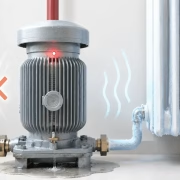
Combi boilers use a diverter valve to switch between supplying hot water and supplying the heating system. When this valve sticks, usually in the hot water position, radiators can stay cold even though taps run hot.
This is one of the most frequent internal faults in combi boilers over eight years old, and it isn’t something to attempt fixing yourself. The valve sits inside the sealed boiler casing, and opening it without proper training risks both safety and your warranty.
When to Call a Gas Safe Engineer
Some situations move straight past the DIY stage and need professional attention.
Call an engineer if pressure keeps dropping despite topping up, if bleeding radiators doesn’t resolve cold spots, if the diverter valve is suspected, or if the boiler displays a persistent fault code. Attempting to open the boiler casing or repair internal components without Gas Safe registration is both illegal and dangerous.
Frequently Asked Questions
Why is my boiler on but radiators are cold?
This usually points to low pressure, a stuck diverter valve, or the boiler being set to hot water only mode rather than heating.
How do I bleed a radiator safely?
Turn off the heating, use a radiator key to slowly open the bleed valve at the top, and close it once water starts flowing steadily without air.
Can low pressure stop my heating from working?
Yes. Pressure below around 1 bar often prevents water from circulating properly, causing radiators to stay cold even with the boiler running.
Is a cold radiator dangerous to ignore?
It’s not dangerous immediately, but ignoring it can lead to uneven wear, sludge build-up, and eventually a bigger repair bill.
How much does it cost to fix a diverter valve fault?
Costs vary by boiler model, but diagnosis and repair typically require a Gas Safe engineer rather than a DIY approach, since it’s an internal component.
Should I try resetting my boiler myself?
A single reset following the manufacturer’s instructions is usually safe. Repeated resets without addressing the underlying fault should be avoided.
Getting Your Heating Back on Track
Most central heating faults come down to a small set of predictable causes, and working through them in order usually solves the problem without needing to call anyone. When the issue involves internal components like the diverter valve or pump, professional help protects both your safety and your boiler’s warranty.
0800 Homefix provides Gas Safe registered heating diagnosis and repairs across London and the South East, with a 24/7 emergency response and no call-out fee, so a cold house doesn’t have to wait until normal working hours to get sorted.

Comments