
 By
By 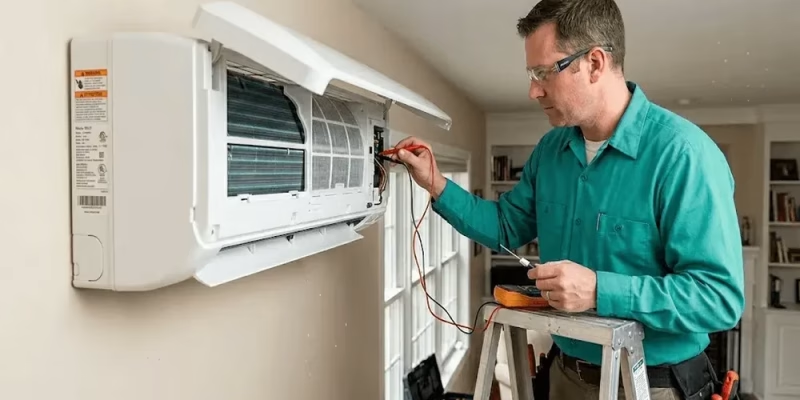
Two homeowners on the same Littleton street can both say they “had the furnace serviced” last fall and mean completely different things. One got a technician who spent forty minutes measuring gas pressure, testing for carbon monoxide and pulling apart the burner assembly. The other got a filter swap, a quick glance, and a sticker on the cabinet. Only one of those visits actually did anything to prevent a January breakdown.
The gap matters more along the Front Range than in most places. Equipment here works at more than 5,000 feet, swings between heating and cooling in the same week each spring and fall, and breathes dry, dusty air for much of the year. Knowing what a complete visit includes is the easiest way to tell whether you are paying for maintenance or just paying for a stop on someone’s route.
Homeowners who want a checklist handled by people who work on these systems every day can look to hvac maintenance in Littleton from Air Of The Rockies. The company repairs, replaces and installs AC and furnace split systems across Littleton and nearby communities, keeps costs reasonable, and sends certified professionals to do the work.
Starting Where the Fire Lives
The furnace cabinet deserves the most attention, since that is where safety is on the line.
- Heat exchanger inspection. This metal chamber keeps combustion gases separate from the air you breathe. Cracks develop slowly from years of heating and cooling cycles, and a good technician looks at it with a light or camera rather than assuming it is fine.
- Burner cleaning and flame check. Burners should produce a steady blue flame. Dust, spider webs and rust flakes can make it lazy or yellow, and a gas furnace set up for sea level may need its pressure adjusted for local altitude.
- Flame sensor cleaning. This small rod is behind a huge share of no-heat calls. A thin layer of residue convinces the furnace that the burners never lit, so it shuts down over and over.
- Carbon monoxide testing. Readings should be taken in the flue and near the supply registers. Colorado law already requires CO alarms near sleeping areas in homes with gas appliances, and a tune-up is a smart moment to confirm yours still work.
Out Beside the House
The condenser takes the brunt of the weather, so its checks focus on wear and cleanliness.
- Coil cleaning. Dust, grass clippings and spring cottonwood fluff mat against the fins and trap heat. A proper cleaning washes the coil from the inside outward instead of pushing debris deeper.
- Capacitor and contactor testing. The capacitor gives the compressor and fan motor the jolt they need to start. A technician should measure it with a meter, since a weak one often looks perfectly normal right up until it fails on the hottest day of July.
- Refrigerant and temperature split. Rather than topping off refrigerant by habit, a careful technician measures pressures and compares the temperature of air entering and leaving the indoor coil. A low charge points to a leak that needs finding, not just refilling.
Following the Air Through the House
Plenty of comfort problems start somewhere between the equipment and the rooms.
- Blower and airflow measurement. The furnace fan moves air in every season. Technicians can check static pressure to see whether ducts, filters or dirty blower wheels are making the motor work too hard. This matters more in Littleton, where many homes switched to denser filters during wildfire smoke seasons without checking whether the system could handle them.
- Condensate drain and humidifier. High efficiency furnaces produce water all winter, and that drain line can clog or freeze where it exits the house. If you have a furnace mounted humidifier, its water panel usually needs replacing once a year, since Front Range minerals crust it over quickly.
At the Wall and on Paper
The final checks are easy to overlook, but they tie everything together.
- Thermostat and safety controls. The technician should confirm the thermostat reads the room accurately, calls for heat and cooling correctly, and that limit switches shut the system down when something overheats.
- A written report with real numbers. Gas pressure, CO readings, capacitor values and temperature split all belong on paper. Those numbers give the next technician a baseline, and many manufacturers want documented annual service before they honor a parts warranty.
Your Part Between Visits
A professional visit twice a year handles the technical work, but a household’s small habits decide how well the equipment holds up in between.
- Check the filter monthly and change it as soon as it looks gray, especially during smoky or windy stretches.
- Keep at least two feet of open space around the outdoor unit, including in winter when snow gets shoveled toward it.
- Clear floor registers and return grilles of furniture, rugs and stored boxes.
- Test smoke and CO alarms when you change clocks in spring and fall.
- Pay attention to new sounds, odd smells, or rooms that suddenly feel different from the rest of the house.
Timing the Calendar Around Front Range Weather
The most useful schedule follows the seasons rather than a random date. A cooling check in April or May catches problems before the first ninety degree week, when repair calls pile up and wait times stretch. A heating check in September or early October gets the furnace ready before the first real freeze, which can arrive surprisingly early in the south metro area.
Homes with heat pumps benefit from both visits too, since the same outdoor unit works hard in summer and winter alike. Older systems past fifteen years old deserve extra attention, because a tune-up is often where signs of a failing heat exchanger or tired compressor show up first, giving you time to plan a replacement rather than scramble for one.
A thorough visit is not about adding charges. It is about measuring what can be measured, cleaning what quietly wears down, and leaving you with a clear picture of how your equipment is really doing. When a tune-up covers all eleven of these points, it earns its place on the calendar.



Comments