
 By
By 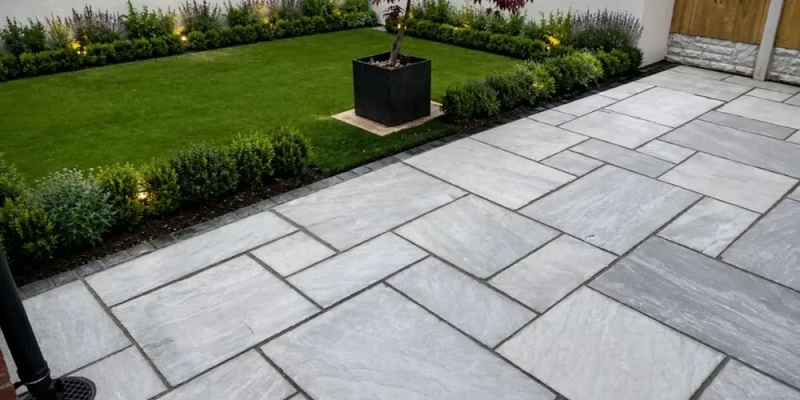
Indian sandstone is generally suitable for British patios, but no paving material performs well when it is laid over an inadequate base or allowed to remain permanently waterlogged.
Rain, frost and shade affect the appearance and maintenance of the patio. Long-term performance depends on the stone quality, sub-base, mortar support, falls, jointing and routine cleaning.
Is Indian Sandstone Suitable for UK Gardens?
Suitable Indian sandstone paving slabs are widely used for patios, paths and garden seating areas across the UK.
A durable installation normally requires:
- Appropriate excavation
- Compacted MOT Type 1
- A full mortar bed
- Suitable priming where specified
- Correct falls
- Stable edge restraint
- Appropriate jointing
How Do the Different Colours Behave Outdoors?
Kandla Grey
Kandla Grey sandstone paving becomes noticeably darker when wet. Its grey surface can show green algae clearly, which helps indicate when cleaning is required.
Raj Green
Raj Green sandstone paving develops richer olive and brown tones after rain. Its natural variation can conceal ordinary dust and leaf marks, although the surface still requires maintenance.
Autumn Brown
Autumn Brown sandstone paving deepens strongly in wet conditions, bringing out copper, brown and rust shades.
Rippon Buff
Rippon Buff sandstone paving changes from pale buff and honey tones to a richer golden appearance when wet. Light surfaces may show leaf tannins and soil more readily.
Fossil Mint
Fossil Mint sandstone paving remains light but displays stronger mineral and fossil markings during rain. It requires attentive cleaning in shaded or planted areas.
Does Sandstone Become Slippery?
A clean riven sandstone surface normally provides useful texture, but no outdoor paving is completely non-slip in every condition.
The principal causes of a slippery surface are:
- Algae
- Moss
- Leaf residue
- Mud
- Grease
- Standing water
Shaded patios and areas beneath trees remain damp for longer and therefore need more frequent attention.
Can Frost Damage Sandstone?
Correctly selected sandstone is generally suitable for normal British freeze-thaw conditions. Risk increases when water is trapped beneath or within an inadequately constructed patio.
Potential causes include:
- Voids under slabs
- Failed joints
- Poor drainage
- Saturated sub-base
- Insufficient falls
- Unsuitable or structurally weak stone
Why Does the Mortar Bed Matter?
A full mortar bed supports the entire reverse of the slab. Spot bedding leaves hollow areas that can retain water and create unsupported sections.
The mortar bed should not be used as a substitute for a poorly prepared sub-base. Both layers have separate structural functions.
Do Slab Sizes Affect Weather Performance?
900 × 600 mm
900 × 600 sandstone paving contains fewer joints across a given area. However, each large slab must still receive complete mortar support.
600 × 600 mm
600 × 600 sandstone slabs contain a regular joint grid. Joint condition should be checked after winter because movement is often first visible along the joints.
Mixed-Size Patio Packs
Mixed-size sandstone paving contains more varied joint lengths. The pattern must be stable and fully jointed rather than relying on jointing compound to hold loose slabs in place.
Why Are Patio Falls Important?
A working fall directs surface water away from the house or towards an appropriate drainage point.
The paving should not bridge the damp-proof course or direct water against the building. Door thresholds, drainage channels and surrounding ground levels should be checked before excavation starts.
What Is Normal Natural Weathering?
- Gradual colour mellowing
- Stronger colour when wet
- Minor mineral marks
- Organic deposits in shade
- Surface patination
- Temporary efflorescence from surrounding materials
These changes should be distinguished from serious failures such as loose slabs, rocking, extensive joint collapse or severe structural delamination.
Should Indian Sandstone Be Sealed?
Sealing is optional. A suitable breathable external sandstone sealer may reduce staining and simplify cleaning, but it can also alter the colour.
Reasons to Seal
- Reducing absorption around dining areas
- Making routine cleaning easier
- Enhancing colour where desired
Reasons to Delay or Avoid Sealing
- The installation still contains moisture
- The homeowner prefers a natural finish
- The selected sealer may darken the stone
- Incorrect application can produce patchiness
Basic Maintenance Schedule
- Sweep leaves and soil regularly.
- Remove bird deposits promptly.
- Clean shaded areas before heavy algae develops.
- Inspect joints after winter.
- Avoid strong acid cleaners.
- Use pressure washing carefully.
Final Advice
Indian sandstone can perform well in British weather, but the installation and drainage usually matter more than broad marketing claims about frost resistance or maintenance.
A clean surface, full mortar support, working falls and stable joints provide the most dependable foundation for long-term performance.




Comments