
 By
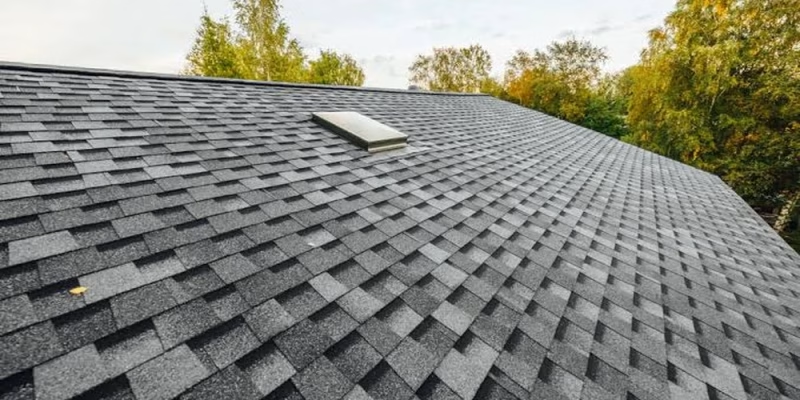
On a Georgia roof, the storms that do the most damage often aren’t the ones with names. More often it’s a late afternoon thunderstorm that builds over the south metro on a muggy July day. The sky goes dark in twenty minutes, and a wall of wind arrives ahead of the rain. A downburst like that only lasts a minute or two, but that’s enough to peel back a row of shingles that was already halfway loose.
Whether a roof shrugs off that gust or ends up across the lawn has little to do with how thick the shingles look. It comes down to small details hidden under each tab. A narrow strip of adhesive, a few nails and some accessories along the edges carry almost the whole load.
Homeowners who’d rather have a professional check those details can call the GAF certified crew at exproofingcontractors.com. The company works out of an office on Adamson Parkway in Morrow and focuses on residential roofing in Clayton and nearby Southside towns. It takes storm calls around the clock and backs its installs with labor and material warranties.
The Glue Strip That Holds Everything Down
Most asphalt shingles sold today are self-sealing. A strip of adhesive is applied at the factory, and once the sun warms it, that strip bonds the bottom edge of each shingle to the course below. Nails keep a shingle attached to the deck. The seal keeps its lower edge flat, so wind can’t slip underneath and pry it up.
That bond matters more than most people realize. The Insurance Institute for Business & Home Safety has spent years testing roofs in its wind and hail programs, and its research on asphalt shingle durability found that sealant strength is a critical factor in resisting wind damage, especially after hail has already hit the roof.
Because heat activates the adhesive, timing matters. A roof put on during a cold stretch in January may not fully seal until warm, sunny days arrive. The industry recommends sealing shingles by hand on very steep slopes or during long cold spells. In practice, many crews skip that step, which leaves a winter roof exposed to the gusty fronts that come through in early spring.
Where the Nails Land Matters More Than How Many
Four nails per shingle is the usual minimum. Six nails is common where codes or warranties call for extra wind resistance. But the count matters less than where the nails go.
Architectural shingles are made of two layers glued together. Nails belong in the narrow zone where those layers overlap, so each fastener goes through both. A nail placed too high misses the second layer, and the shingle hangs by half its thickness. A nail placed too low leaves its head exposed to the weather.
How the nail is driven matters too. An overdriven nail sinks through the fiberglass mat and has almost no holding power. An underdriven nail sticks up, props up the shingle above it and keeps the sealant from bonding. Nails shot in at an angle do a bit of both. None of this shows from the street, which is why workmanship decides how a roof handles wind more than the shingle brand does.
Manufacturers have tried to make good nailing easier. GAF’s Timberline shingles with LayerLock technology have a wider nailing area that’s easier to hit. With four nails per shingle and at least four qualifying GAF accessories, they qualify for a 15-year WindProven limited wind warranty with no maximum wind speed.
Trouble Starts at the Edges
Wind doesn’t press evenly across a roof. Uplift is strongest at the eaves, the rakes, the corners and along the ridge, where moving air separates from the surface and pulls hardest. Blow-offs usually start in those spots, and a well-built roof gives them extra protection.
The edge parts that make the biggest difference are:
- Starter strip shingles with factory-applied adhesive along both the eaves and the rakes, so the first course has something to bond to
- Metal drip edge that stiffens the roof’s perimeter and directs water away from the fascia
- Leak barrier membrane in valleys and around chimneys and vents, where wind-driven rain looks for gaps
- Ridge cap shingles made for the ridge, nailed according to the manufacturer’s high-wind instructions
An old shortcut is to flip regular shingles upside down and use them as a starter course. It leaves the sealant in the wrong place and puts the most exposed row on the roof at a disadvantage from day one.
Decoding the Numbers on the Wrapper
Shingle bundles carry wind ratings from two lab tests. ASTM D3161 uses a fan to blow on test panels, and its Class F rating corresponds to 110 miles per hour. ASTM D7158 measures uplift resistance and assigns classes, with Class H rated for 150 miles per hour and Class G and Class D below it.
These ratings are a useful starting point, but they come from new shingles in a controlled lab. In a ten-year IBHS study of roofs aging naturally in several states, shingles with the industry’s top wind rating performed very differently from one another, and climate affected how well the sealant activated and held up over time. A label tells you how a shingle performed when it was new. It doesn’t promise how it will hold up in year twelve.
Why an Older Roof Lets Go First
Field research on roofs in Florida and Texas found partially unsealed shingles on 22 of the 30 roofs surveyed. The researchers concluded that unsealing happens naturally over time, and that it’s a contributing cause of shingle damage in high winds. Years of heat, cold and UV make the adhesive brittle. Small gusts slowly break the bond, often without anyone noticing.
Georgia’s long, hot summers speed that up. That’s why roofs from the same subdivision can come through the same storm so differently. The fifteen-year-old roof loses a dozen tabs, and the five-year-old roof next door barely notices. An inspection that checks seal condition on an aging roof can catch the problem before a storm does.
The Hour After the Wind Dies Down
Once the storm has passed, a lot can be checked safely from the ground. Look for pieces of shingle in the yard and lighter rectangles on the roof where tabs used to be. Look for dark patches where underlayment or bare decking shows through. Also watch for a creased shingle, which still lies flat but has a straight horizontal line across it. That line means the wind lifted and folded it, and the bond underneath is probably gone.
Bent ridge caps, shifted vents and a fresh pile of granules at the bottom of a downspout all point the same way. Take dated photos before anyone touches the roof, since insurers often want to see the damage as the storm left it. If water is coming inside, a temporary tarp keeps a small repair from turning into a ceiling replacement.
Building a Roof That Stays Put
When it’s time for a new roof, the questions that matter most are mostly about what goes under the shingles. Ask how many nails will go in each shingle and where they’ll go. Ask whether the starter strips will run along the rakes as well as the eaves, and whether the roof will be hand-sealed if it’s installed in cold weather. Ask what condition the decking is in and how it will be fastened. A roof put together with care at each of those steps holds through a summer squall, and one put together carelessly is likely to come apart in the first strong gust.




Comments