
 By
By 
Small office cleaning services have become something of a bellwether for how we think about workplace environments in the twenty-first century. In Singapore, where space constraints and humidity create unique challenges, the question of how to maintain a clean office has evolved from a simple housekeeping matter into a complex consideration involving health, productivity, and environmental responsibility. The small office, typically housing between five and twenty workers in close quarters, presents a microcosm of larger workplace challenges, and how we address cleanliness in these spaces reveals much about our changing attitudes towards work itself.
The Science of Workplace Contamination
What happens in an office when professional cleaning lapses is more alarming than most people realise. Studies of workplace environments have documented extraordinary concentrations of bacteria on common surfaces. Keyboards harbour microorganisms in quantities that would concern even the most relaxed microbiologist. Door handles become vectors for pathogen transmission. Carpets accumulate not merely visible dirt but a catalogue of allergens, dust mites, and particulate matter that degrades indoor air quality with each passing week.
The National Environment Agency has observed that “inadequate cleaning and poor hygiene practices in workplaces can lead to the spread of communicable diseases and affect the health of workers.” This is not bureaucratic overstatement. In Singapore’s climate, where year-round warmth and humidity create ideal conditions for microbial growth, the consequences of neglecting proper cleaning protocols can manifest swiftly and unpleasantly.
Professional Small office cleaning services address these biological realities with systematic thoroughness that casual tidying cannot achieve. They bring to bear not only training and equipment but an understanding of how contamination spreads and where it concentrates in office environments.
What Proper Office Cleaning Actually Involves
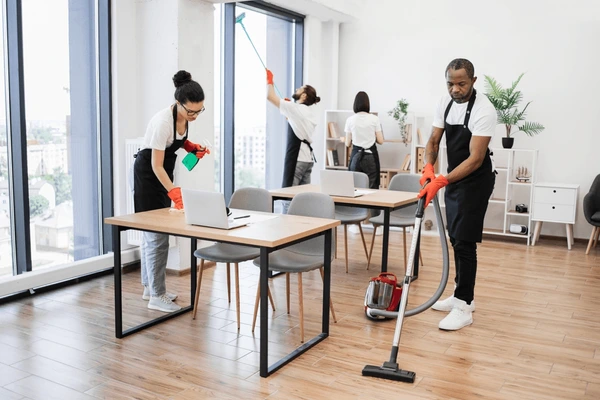
The scope of professional cleaning extends considerably beyond what most small business owners envision when they first consider outsourcing this function. A comprehensive service typically includes:
- Systematic vacuuming using HEPA-filtered equipment that captures fine particulates rather than merely redistributing them
- Wet mopping with appropriate disinfectants for different flooring types
- Sanitisation of high-touch surfaces including light switches, door handles, and shared equipment
- Toilet facility cleaning with particular attention to fixtures, floors, and ventilation areas
- Waste removal with proper segregation for recycling compliance
- Dusting of horizontal surfaces, shelving, and electronic equipment
- Kitchen and pantry cleaning including appliances, countertops, and storage areas
The Ministry of Manpower’s workplace safety guidelines specify that employers must “ensure that every workplace is cleaned at appropriate intervals,” recognising that regular professional attention forms part of the basic duty of care owed to employees. Small office cleaning services fulfil this obligation whilst addressing the practical reality that most employees lack both the time and expertise to maintain proper hygiene standards themselves.
The Economics of Professional Versus Amateur Cleaning
The calculation that many small business owners make when weighing whether to engage professional services often focuses narrowly on direct costs. This overlooks several less obvious but significant factors. When employees perform cleaning tasks, their productive capacity redirects towards work for which they possess neither training nor particular aptitude. The opportunity cost accumulates invisibly but substantially.
Moreover, amateur cleaning typically proves less effective than professional work, meaning that surfaces require attention more frequently and deterioration of office fixtures accelerates. Carpets wear prematurely when improper cleaning methods damage fibres. Wooden furniture degrades when treated with inappropriate products. Electronic equipment fails when cleaned with solutions that leave conductive residue.
Professional Small office cleaning services avoid these pitfalls through systematic training and proper equipment. The initial expense proves, upon closer examination, to be an investment in asset preservation and operational efficiency rather than a pure cost.
Health Implications That Extend Beyond Appearances
The relationship between office cleanliness and worker health has become increasingly well-documented. Poor indoor air quality, often resulting from inadequate cleaning, contributes to what building scientists term “sick building syndrome,” a constellation of symptoms including headaches, fatigue, and respiratory irritation.
The Health Promotion Board has noted in public guidance that “a clean workplace environment supports both physical and mental well-being,” acknowledging research linking workplace hygiene to reduced absenteeism and improved staff morale. In small offices where individuals work in proximity, a single person arriving whilst unwell can trigger a cascade of illness transmission. Regular professional cleaning, particularly of communal surfaces, interrupts these transmission pathways.
Environmental Considerations in Modern Cleaning
The cleaning industry itself has undergone transformation in recent years, driven partly by regulatory pressure and partly by growing environmental awareness. Traditional cleaning chemicals, whilst effective, often contained compounds that posed risks to both human health and aquatic ecosystems when washed into drainage systems.
The National Environment Agency’s guidelines now encourage “the use of environmentally friendly cleaning products and methods,” reflecting broader recognition that workplace practices carry consequences extending beyond individual premises. Many providers of small office cleaning services have responded by adopting green cleaning protocols using plant-based solutions and microfibre technologies that reduce chemical dependence.
Making Informed Decisions About Cleaning Services
Selecting appropriate cleaning services requires consideration of several factors beyond simple cost comparison. Reliability matters enormously, as irregular service undermines the cumulative benefits of professional cleaning. Training standards vary significantly between providers, affecting both cleaning quality and security. Insurance coverage protects against the unlikely but potentially costly scenarios involving damage or injury.
The frequency of cleaning warrants particular attention. Some small offices function adequately with twice-weekly service, whilst others, particularly those with high client traffic or specialised hygiene requirements, need daily attention. The most effective arrangements emerge from honest assessment of actual needs rather than wishful thinking about minimal acceptable standards.
In Singapore’s competitive business environment, the condition of one’s workspace communicates volumes about organisational values and professional standards. Small office cleaning services provide the expertise and consistency necessary to maintain environments where both people and enterprises can flourish.








Comments